


Charcoal Grills in Commercial Kitchens: Rules & Venting
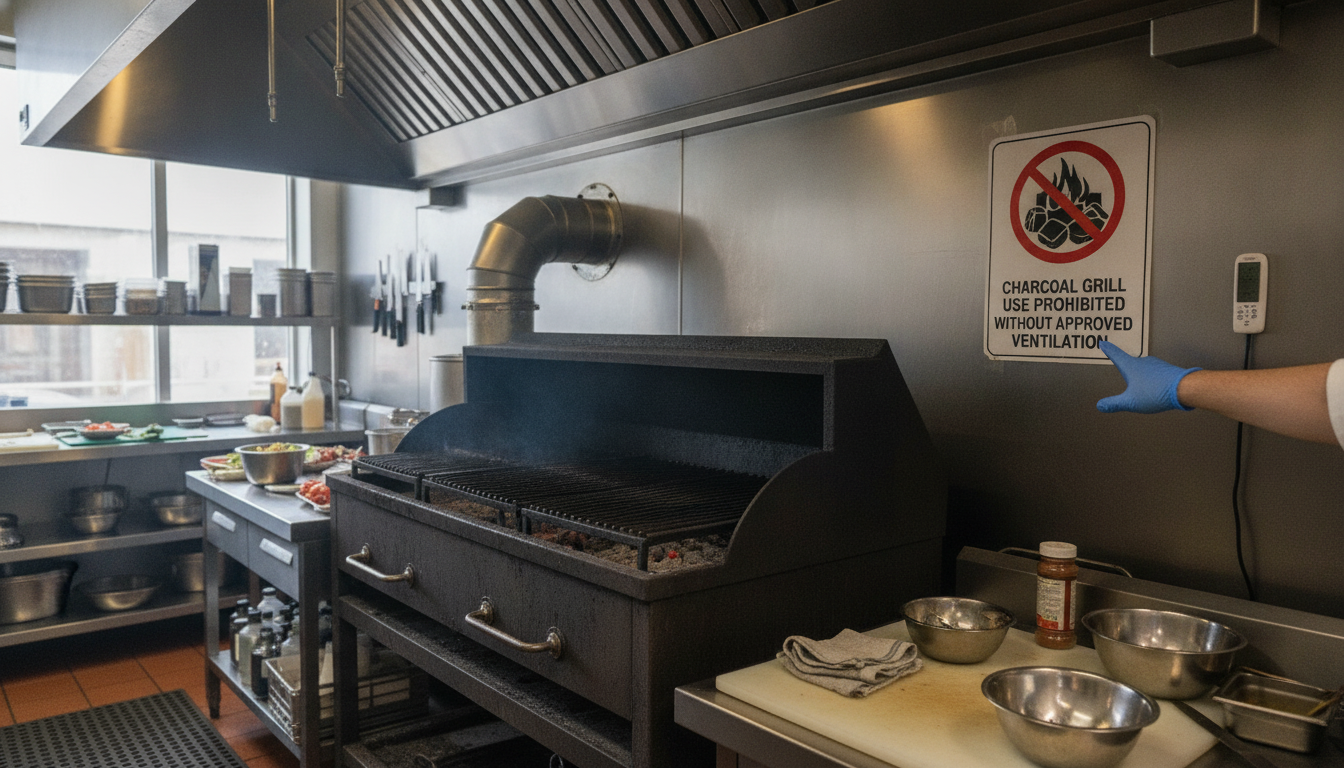
Can I use a charcoal grill in a commercial kitchen?
Sometimes, but only if your facility can meet strict fire code, ventilation, and health department requirements. Charcoal produces heavy smoke, sparks, grease-laden vapors, and carbon monoxide, so it’s treated as a higher-risk solid-fuel cooking setup than standard gas or electric equipment. Most commercial kitchens can’t simply roll in a backyard-style charcoal grill and start service without dedicated infrastructure and approvals.
In many jurisdictions, using charcoal indoors requires a properly designed commercial hood system (often a Type I hood), fire suppression, and a ventilation plan that’s rated for solid-fuel cooking. Inspectors may also require spark arrestors, ember-resistant construction near the cooking area, and safe ash handling procedures. Even when outdoor cooking is allowed, there may be rules about distance from doors, windows, air intakes, combustible surfaces, and customer areas.
Operationally, charcoal grills add considerations that impact service and compliance. You’ll need a controlled fuel storage method, a safe ignition process, and a written procedure for disposing of hot coals and ash. Many fires start from embers placed in plastic bins or dumped before they’re fully cooled. Staff training, documented cleaning schedules, and routine hood and duct maintenance become especially important due to soot and creosote buildup associated with solid fuels.
If you’re planning to add charcoal cooking to your menu, the safest path is to confirm requirements with your local authority having jurisdiction (fire marshal/building department) and the health department before purchasing equipment. For a deeper breakdown of common requirements and practical alternatives, visit https://agathin.com/can-i-use-a-charcoal-grill-in-a-commercial-kitchen/.
For Charcoal Grills in Commercial Kitchens: Rules & Venting, the best answer depends on fit, material, care instructions, and how the product will be used day to day.
FAQ
What kind of ventilation is typically required for solid-fuel cooking?
Solid-fuel cooking is commonly required to be under a commercial Type I hood with fire suppression, plus additional features to manage sparks and heavy smoke. Exact requirements vary by local code, so approval from the fire marshal/building inspector is usually necessary.













Leave a comment