


Cat Tree Tower With House: Stability, Size & Setup
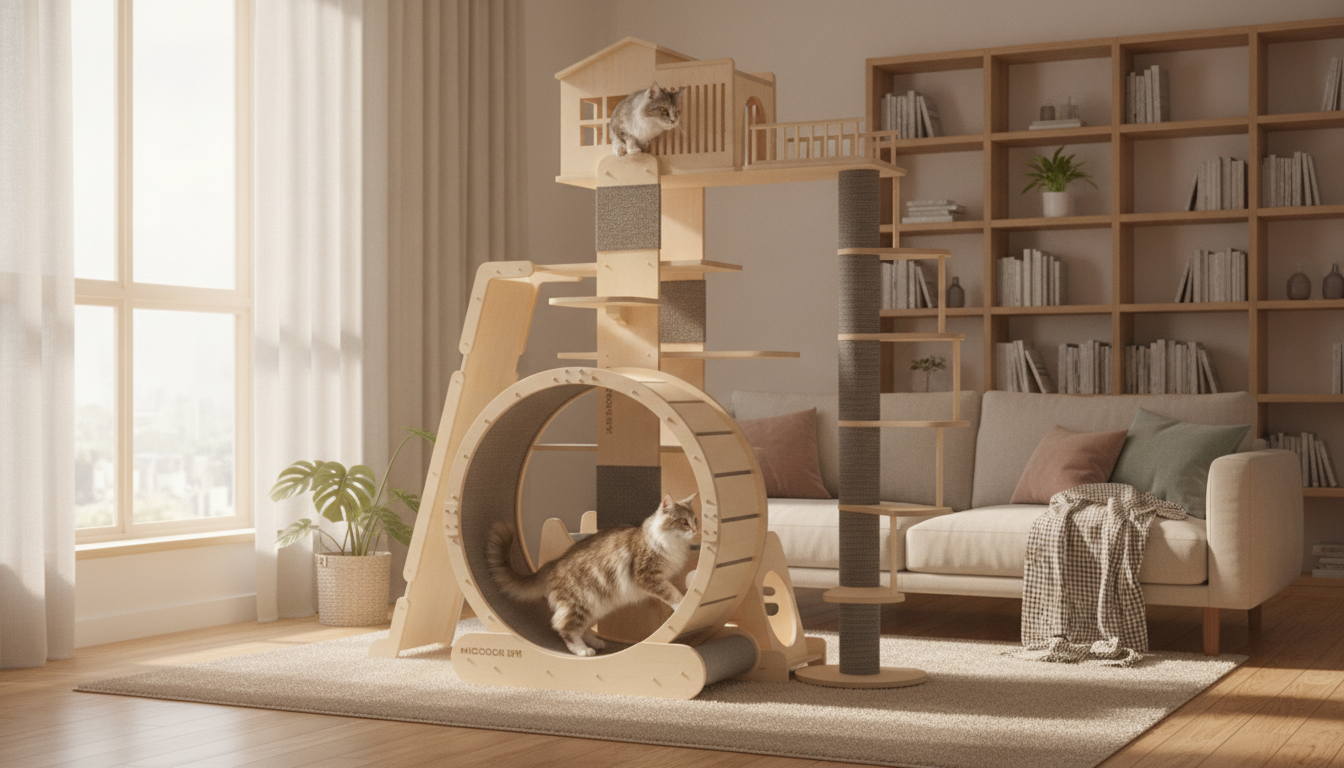
A well-designed cat tree tower with an enclosed house gives cats a place to climb, scratch, perch, and retreat—often reducing boredom-related behaviors and creating a predictable “home base” indoors. The right layout matters even more for larger cats, multi-cat homes, and energetic kittens that need vertical space.
What a tower with a house adds to everyday cat life
Cat towers that combine open platforms with a covered cubby do more than “look cute”—they support core feline needs in a way that fits most homes.
- Vertical territory: Perches create safe observation spots that many cats prefer over floor-level resting areas.
- A covered house: An enclosed cubby supports hiding, napping, and decompression after play or household noise.
- Scratch zones: Dedicated posts help redirect clawing away from furniture by providing an acceptable texture and location.
- Movement without chaos: Climbing routes encourage activity in a controlled area instead of countertops and shelves.
- Multi-cat tension relief: Multiple levels reduce competition by adding “lanes” for passing and resting.
Organizations like the ASPCA and the American Association of Feline Practitioners (AAFP) highlight enrichment and predictable safe spaces as practical tools for supporting healthy cat behavior.
Sizing and stability for larger cats
“Bigger” isn’t just about height. For heavier cats, stability and usable platform space make the difference between a beloved daily hangout and something they avoid.
- Base footprint: Wider bases generally reduce tipping when cats jump from a running start.
- Platform dimensions: Larger cats need perches that allow a full turn and a relaxed loaf without dangling paws.
- Post thickness and attachment points: Sturdier posts and reinforced joints matter more than overall height.
- Weight distribution: Staggered levels can be easier on joints than long vertical leaps.
- Placement: Positioning near a wall (or corner) can improve perceived security and reduce wobble.
If you’re shopping specifically for big-bodied climbers, consider a purpose-built option like Cat Tree Tower House for Large Cats, which is designed around sturdier footing and roomier lounging areas.
Materials and build features to look for
Cats interact with a tower using claws, scent glands, and repeated jumping—so materials matter for both comfort and longevity.
- Scratching surface: Sisal rope or sisal fabric tends to be durable and appealing for scratching.
- Covering fabric: Plush is cozy but can snag; tighter weaves can resist pulling (important for heavy scratchers).
- Easy-clean considerations: Removable cushions or wipeable surfaces simplify hair and dander maintenance.
- Odor and shedding: Materials that don’t trap odors can help in small apartments.
- Hardware quality: Metal fasteners and clear assembly alignment reduce long-term wobble.
For additional cat-friendly home setup guidance, the Cornell Feline Health Center is a helpful reference for behavior and environment topics.
Where a tower fits best in the home
Placement can make the same tower feel either “safe and popular” or “exposed and ignored.” Use your cat’s current habits as a map.
- Near a window: Many cats use upper platforms as a viewing station for birds, people, and outdoor activity.
- Away from litter and food: Separating rest/scratch zones from litter areas can encourage more frequent use.
- Traffic patterns: Place the enclosed house where cats can retreat without being cornered by kids or other pets.
- Temperature and sunlight: Avoid heating vents that can overheat the enclosed cubby; morning sun can be ideal.
- One “anchor” piece per main area: A primary tower in the living space often gets more use than one tucked away.
If your cat likes to supervise while you work, pairing a stable tower in the office area with a simple, open layout can reduce desk-jumping. A streamlined surface like the Modern Chrome Writing Desk for Home Office can be easier to keep clear, while the cat’s “approved” perch stays close by.
Quick comparison: tower and house features that matter
Use this checklist to compare models by stability, comfort, and daily usability.
| Feature | Why it matters | What to look for |
|---|---|---|
| Wide base | Reduces wobble and tipping | Broad footprint and low center of gravity |
| Large perches | Comfort for big bodies and stretching | Platforms that fit a full turn and relaxed sprawl |
| Enclosed house/cubby | Retreat space for stress relief | Roomy opening and ventilated interior |
| Sisal scratching posts | Protects furniture by redirecting scratching | Multiple posts at different heights |
| Multiple levels | Exercise and multi-cat harmony | Staggered steps rather than single big leaps |
| Replaceable parts | Extends lifespan of the tower | Removable cushions or replaceable rope/sections |
Getting cats to use it (especially if they ignore new furniture)
Some cats climb immediately; others treat new items like suspicious furniture that appeared overnight. Small, low-pressure steps usually work best.
Care, safety checks, and longevity
A ready-made option for big climbers
Cat Tree Tower House for Large Cats is a strong starting point when stability and space-per-level matter more than extreme height.
FAQ
Are cat towers good for indoor cats?
Yes—cat towers add vertical space for climbing, resting, and observing, which supports exercise and daily enrichment indoors. They also provide dedicated scratching areas and can reduce tension in multi-cat homes by offering multiple levels and “escape routes.”
Does TJ Maxx sell cat towers?
Sometimes, but availability varies by location and season, and the selection can change quickly. If you find one in-store, check for a wide base, roomy perches, and tight hardware so it doesn’t wobble once your cat starts jumping.
What can I use instead of a cat tower?
Wall-mounted cat shelves, window perches, and sturdy bookcases (secured to the wall) can provide vertical territory. Pair any alternative with a reliable scratcher and at least one comfortable resting spot so your cat can climb, perch, and decompress safely.













Leave a comment