


Litter Box Size Guide for Built-In Cat Tree Cabinets
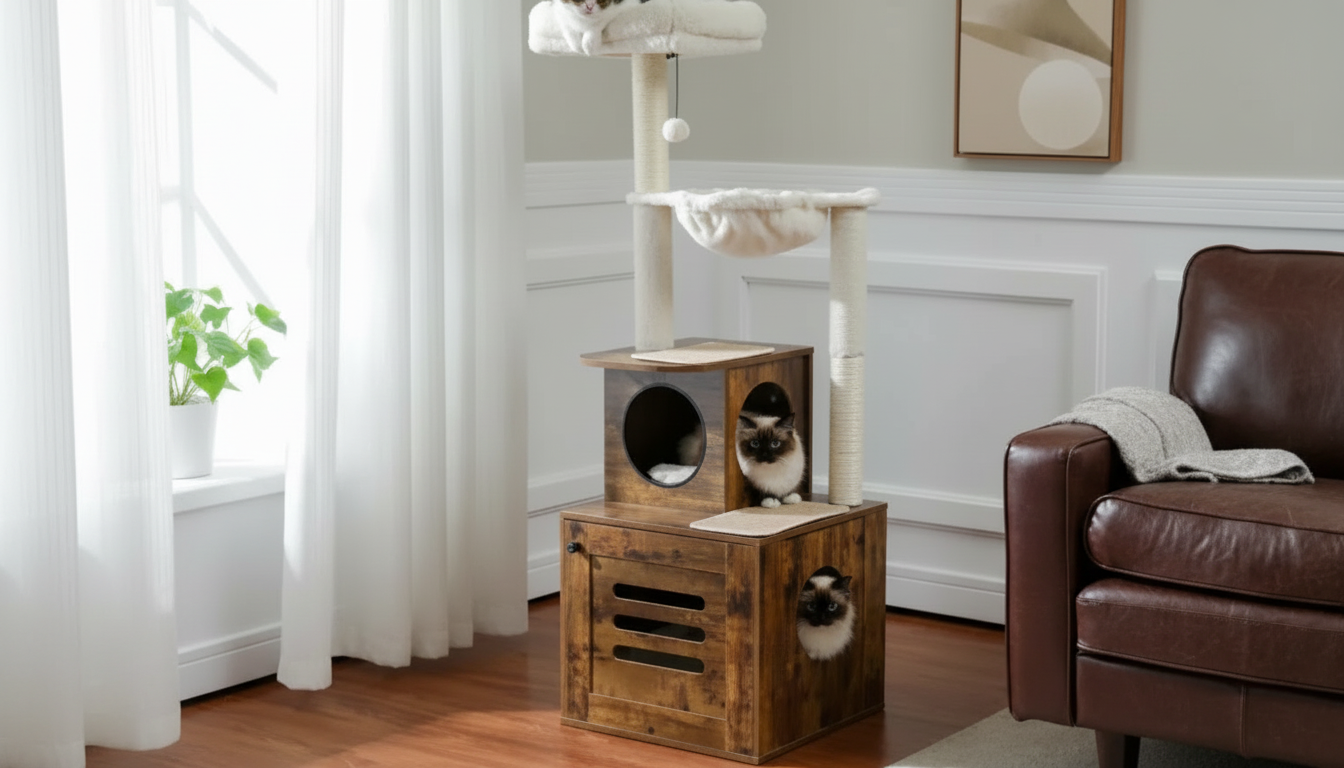
What size litter box fits inside a built-in litter box cat tree cabinet?
Answer
The right litter box size depends on the cabinet’s interior footprint (width × depth) and the entry height inside the built-in compartment. A good rule is to leave at least 1–2 inches of clearance on each side of the box for easy placement, airflow, and cleaning—plus enough room to slide a scoop or small trash bag in beside it.
Start by measuring the interior floor space of the litter cabinet (not the outside dimensions). Then choose a box that’s slightly smaller than those measurements. In many built-in litter box cat tree cabinets, a “medium” pan around 18–20 inches long and 14–16 inches wide fits comfortably. If your cabinet is more spacious, a “large” box in the 22–24 inch long by 16–18 inch wide range may work—as long as you can still remove the pan without tilting or forcing it through the opening.
Also check height. If the cabinet uses a side entry cutout, make sure the box rim doesn’t block the doorway and that your cat can step in easily. High-sided pans and top-entry boxes can reduce scatter, but they often need more vertical clearance and can be awkward to lift out for dumping and washing. For most built-in compartments, a low-to-mid height pan (about 5–7 inches tall) is the easiest to live with day to day.
If you’re pairing the cabinet with a cat tree tower that also functions as a hidden litter area, plan for maintenance: you’ll want enough extra room to pull the box out, wipe the floor, and replace a liner or mat without disassembling anything. For design details and how hidden litter box cat tree setups are typically laid out, see the main guide here: wood cat tree tower with hidden litter box and scratching posts.
FAQ
How do I measure a cabinet to choose the right litter box?
Measure the interior floor width and depth at the narrowest points, then subtract 2–4 inches total to allow clearance. Confirm the door or entry opening is wide and tall enough to remove the box without tilting or spilling litter.














Leave a comment