


Stable Cat Scratcher Tower: Features That Prevent Tipping
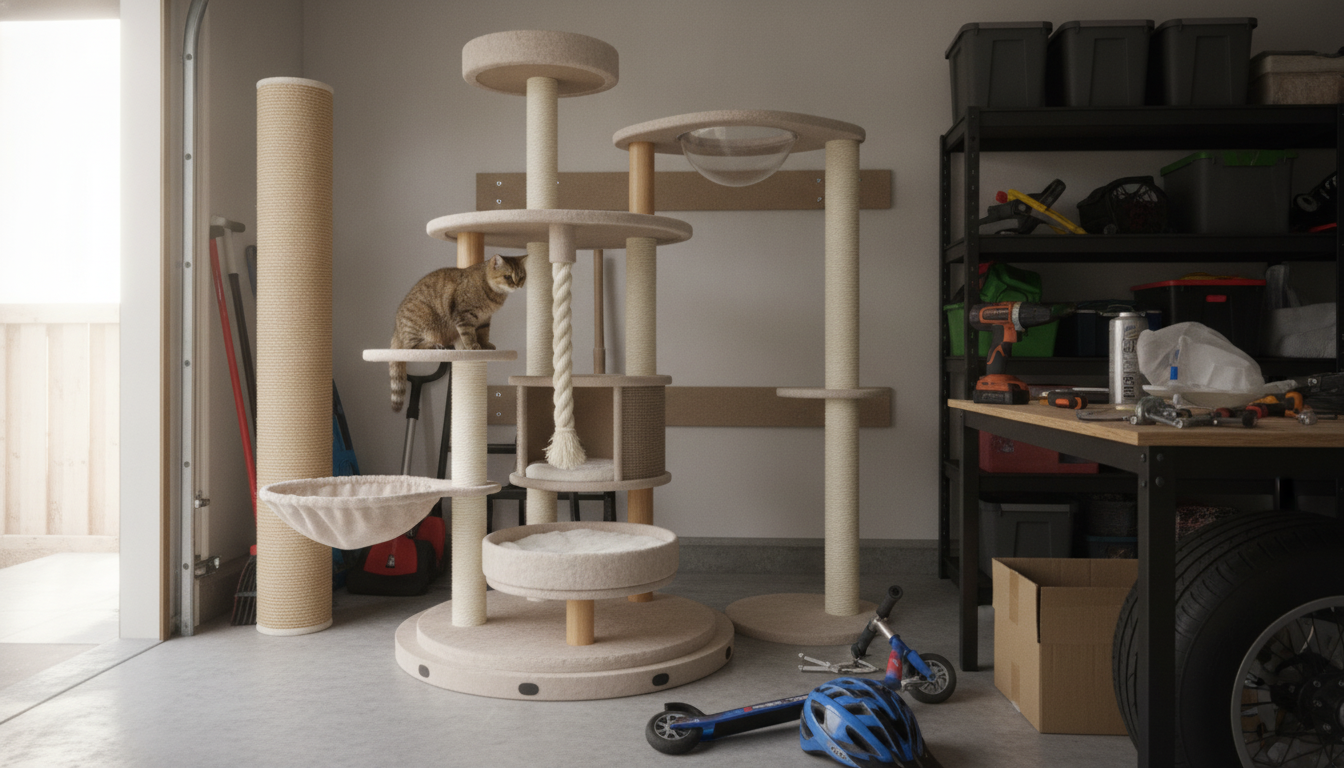
What features should I look for in a stable cat scratcher tower that won’t tip over?
A stable cat scratcher tower starts with a strong foundation, smart proportions, and materials that can handle jumping, climbing, and vigorous scratching. If the tower wobbles when you shake it lightly or shifts when your cat launches onto it, it’s likely to tip during real use. Focus on the parts that control balance first, then look at the details that keep the structure tight over time.
Choose a wide, heavy base
The base is the biggest predictor of stability. Look for a broad footprint with a thick platform (not thin particleboard) and enough weight to resist rocking. A base that extends beyond the main posts is generally more stable than one that’s narrow and “stacked” upward.
Look for thick posts and solid connectors
Thicker vertical posts flex less and reduce sway, especially on taller towers. Check that posts screw into the base with long bolts and metal hardware, not short screws that can strip. Reinforced brackets or dual-anchor points add rigidity where platforms meet posts.
Mind the height-to-footprint ratio
Tall towers are more likely to tip if the base is compact. If you want height for climbers, prioritize models with a wider base, fewer skinny “spires,” and staggered platforms that distribute weight. Avoid designs with large overhanging perches that act like a lever when your cat jumps onto the edge.
Non-slip feet and floor-friendly grip
Stability depends on traction, not just weight. Rubber feet or a textured underside help prevent sliding on hardwood or tile. For extra security, choose towers that can be anchored to a wall when placed in high-traffic areas or near running/jumping launch points.
Durable materials and tight tolerances
High-density engineered wood, plywood, or solid wood holds fasteners better than low-grade particleboard. Platforms should sit flush without gaps, and carpet or fabric should be tightly wrapped so it doesn’t loosen and create wobble. Re-tightening bolts after the first week of use helps keep everything secure.
For a deeper breakdown of stability factors and what to check before buying, visit the full guide here.
FAQ
How do I keep my cat tower from sliding on hardwood floors?
Add a non-slip mat under the base or choose a tower with rubberized feet. Placing the tower against a wall or in a corner can also reduce lateral movement during jumps.













Leave a comment