


Round Vessel Sink Drains: Pop-Up and Overflow Tips
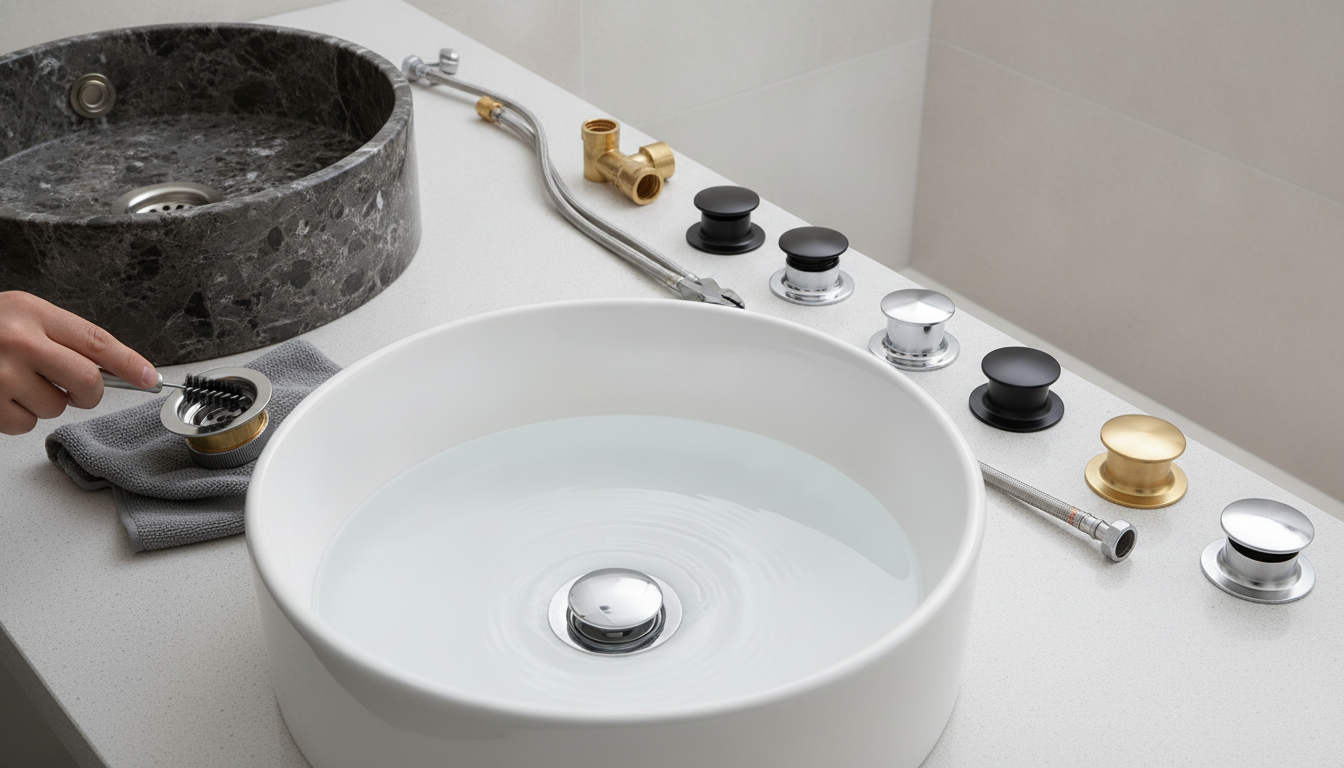
Do round vessel sinks require a special drain or pop-up assembly?
Answer
Most round vessel sinks don’t require a “special” drain just because they’re round, but they do require the right type of drain and pop-up for a vessel-style installation. In practice, what matters is the sink’s drain hole size and shape, whether the sink has an overflow, and whether you want a push (pop-up) stopper or a fixed, open drain.
Many vessel sinks (including round bowls) are made without an overflow. If there’s no overflow channel, you should use a drain labeled “no overflow.” Using an “overflow” drain on a no-overflow sink can allow water to seep out through the overflow ports under the flange instead of sealing cleanly. If your vessel sink does have an overflow, choose an “overflow” drain so the overflow path can work as intended.
Pop-up assemblies are optional and depend on how you want to control water in the basin. A standard lavatory pop-up can work with some vessel sinks, but many people choose a vessel-specific pop-up or a click-clack (push-button) drain for a cleaner look above the counter. Just confirm compatibility with the faucet style: if the faucet has no lift rod (common with wall-mount and many vessel faucets), a push-to-close pop-up is often the simplest match.
Also check drain hole diameter (commonly 1-3/4 inches for bathroom sinks) and ensure the drain’s threaded shank is long enough for a thicker vessel sink plus any countertop thickness. A proper seal is typically achieved with the included gasket(s) and plumber’s putty or silicone as recommended by the drain manufacturer.
For a detailed compatibility checklist and drain recommendations, see the full guide here: https://agathin.com/do-round-vessel-sinks-require-a-special-drain-or-pop-up-assembly/.
FAQ
Do vessel sinks need an overflow drain?
Only if the sink has an overflow channel built in. If your vessel sink has no overflow, use a “no overflow” drain to seal correctly and avoid leaks through overflow openings.
















Leave a comment