


Car Seat Comfort Tips for Back Pain Relief While Driving
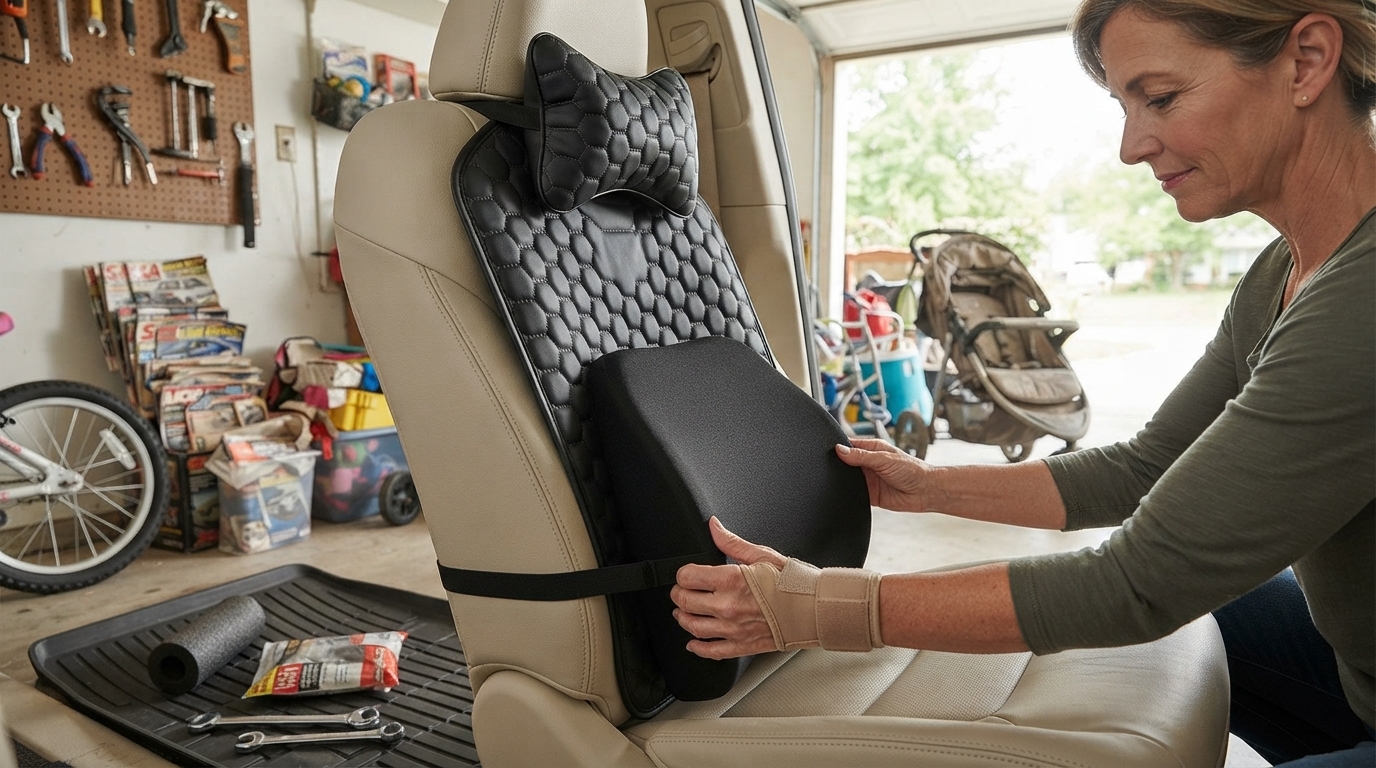
How to make a car seat more comfortable for back pain?
Back pain on the road usually comes from a mix of poor posture, uneven support, and constant vibration. The goal is to get your spine in a neutral position, reduce pressure points, and keep your muscles from “holding on” for long stretches.
Start with the seat position (before adding accessories)
Move the seat close enough that your knees stay slightly bent and your hips sit level or a touch higher than your knees. Recline only a little—roughly upright—so your shoulders can rest against the seatback without hunching forward. Adjust the steering wheel so your elbows remain slightly bent; reaching is a common trigger for mid-back and shoulder tension.
Dial in lumbar support
If your car has adjustable lumbar, set it so it fills the natural curve of your lower back without pushing you forward. If it’s too aggressive, it can increase discomfort; if it’s too flat, your pelvis tends to roll backward and slouch. A small rolled towel or a slim lumbar cushion can help when built-in support is lacking—aim for support at the beltline, not the middle of your back.
Reduce pressure on your tailbone and hips
A seat cushion can make long drives easier by improving weight distribution. Look for a cushion that supports the sit bones and keeps your pelvis stable (not a super-soft pad that sinks). If tailbone pain is an issue, a cut-out design can relieve direct pressure, but only if it doesn’t tilt you into a slouch.
Support your upper body and neck
Set the headrest so the middle aligns with the back of your head, not your neck. If you’re shorter or the headrest sits too far back, a thin headrest pillow can reduce “forward head” posture. Keep your shoulders relaxed and avoid gripping the wheel; a light hold reduces upper-back fatigue.
Build in movement breaks
Even a perfect setup won’t beat hours of stillness. On longer trips, stop every 60–90 minutes to stand, walk, and gently extend your hips and back. Small posture resets while driving—like relaxing your jaw and re-centering your hips—can also help.
For more detailed steps and product ideas, visit this complete guide on making a car seat more comfortable for back pain.
FAQ
Is a lumbar pillow or a seat cushion better for driving back pain?
It depends on the cause: lumbar pillows help most when you slouch or lack lower-back support, while seat cushions help more when pressure on the tailbone/hips or seat angle triggers pain. Many drivers get the best results using a slim lumbar support plus a firm, supportive cushion.













Leave a comment