


Cat Enrichment Ideas: Daily Play, Puzzles, and Climbing
How do I create enrichment for my cat?
Cat enrichment is about giving your cat safe, satisfying ways to hunt, climb, scratch, explore, and solve small “problems” every day. The best plan mixes physical activity, mental stimulation, and choice—without overwhelming your cat or turning your home upside down.
Start with a simple daily “hunt and eat” routine
Many cats perk up when meals feel like a mini hunt. Try splitting your cat’s normal portion into several small servings and placing them in different locations. Puzzle feeders, treat balls, and snuffle-style mats can slow eating and keep the brain busy. If your cat is new to puzzles, begin with easy options (wide openings, fewer obstacles) and gradually increase the challenge.
Add vertical space and safe hiding spots
Cats relax and gain confidence when they can get up high and also tuck away. Use cat trees, wall shelves, sturdy bookcases, or window perches to create “cat highways.” Pair that with a couple of cozy hiding options—like a covered bed, a box with a side opening, or a quiet closet shelf—so your cat can choose social time or solitude.
Rotate toys to keep them interesting
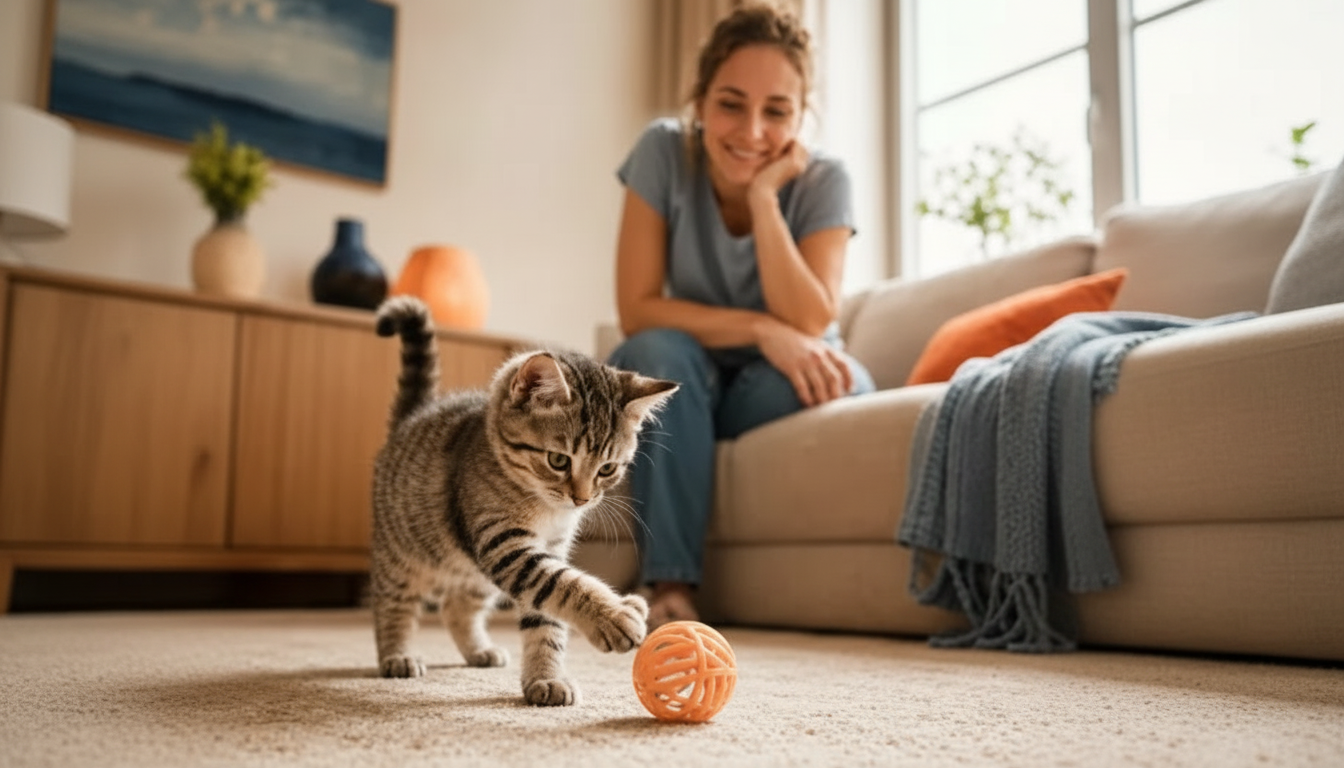
Instead of leaving every toy out, keep a small selection available and rotate weekly. Wand toys encourage chasing and pouncing, while kicker toys let cats grab and bunny-kick. For solo play, small mice toys or crinkle balls can work well—just avoid strings or loose parts that can be swallowed when unsupervised.
Include scent and sound enrichment
Try cat-safe scents like a pinch of catnip or silvervine (not all cats respond). You can also offer new smells by bringing in a paper bag, a cardboard box, or a blanket that smells like a familiar person. For sound enrichment, some cats enjoy brief “cat TV” sessions through a window or a short, calm nature video—always monitor for frustration.
Make play predictable and end with a win
Aim for 5–10 minute play sessions once or twice a day, especially for indoor cats. Let your cat “catch” the toy occasionally, then finish with a small meal or treat to complete the hunt cycle. For more ideas and step-by-step enrichment options, visit the main guide on cat enrichment.
FAQ
How often should I play with my cat each day?
Most cats do well with one to two short play sessions daily, usually 5–15 minutes each. Kittens and high-energy cats may need more frequent bursts, while older cats may prefer gentler, shorter sessions.















Leave a comment