


Buy vs Build a Cat Tree: Which Is Cheaper?
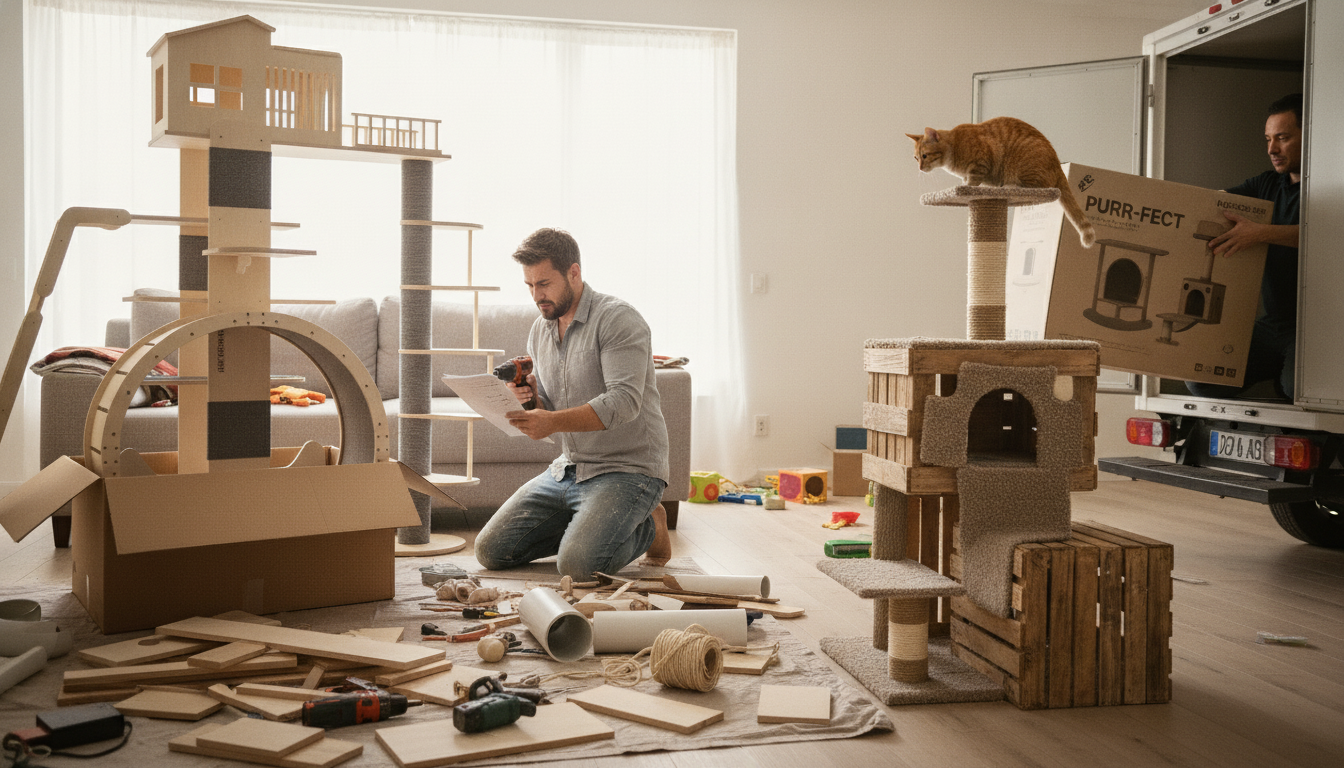
Is it cheaper to buy or build a cat tree?
It depends on the size and features you want, but for most people, buying a cat tree is cheaper once you factor in materials, tools, and time. Building can be a good deal only when you already have leftover lumber, carpet/sisal, and the right tools—or when you’re making a very simple, small setup.
When buying is usually cheaper
Mass-produced cat trees often win on price because manufacturers buy carpet, sisal, and particleboard in bulk. Entry-level and mid-range models can cost less than the combined price of plywood, posts, fasteners, and coverings from a hardware store. Buying also avoids “hidden” costs like staple guns, saw blades, extra brackets, and multiple trips for forgotten parts.
Another savings is predictability: you can compare prices, read reviews, and choose a tree sized for your cat and space without trial-and-error spending.
When building can be cheaper (and when it isn’t)
DIY can come out ahead if you’re building a basic tower and already own tools like a drill, saw, and sander. It can also make sense if you can repurpose sturdy scrap wood and only need to buy sisal rope and a small amount of carpet or fabric.
Building is often not cheaper if you want multiple platforms, a roomy condo, thick posts, and a heavy base for stability. Those upgrades quickly increase material costs, and sturdiness matters—especially for larger cats or energetic jumpers—so cutting corners can lead to wobbling or early replacement.
Cost isn’t the only factor: stability and safety matter
A “cheaper” option isn’t a bargain if it tips, sheds, or can’t handle daily use. If you’re comparing options, prioritize a stable base, appropriately sized perches, and durable scratching surfaces. For a detailed breakdown of choosing the right size and setup, visit this cat tree guide.
FAQ
What size cat tree is best for an apartment?
A vertical cat tree with a smaller footprint (around 20–24 inches square) usually fits apartments well while still offering height, perches, and a scratch post. Choose a model with a heavy base so it stays stable in tighter spaces.












Leave a comment