


HEPA + Carbon Air Purifier: Smoke, Odors & Dust Help
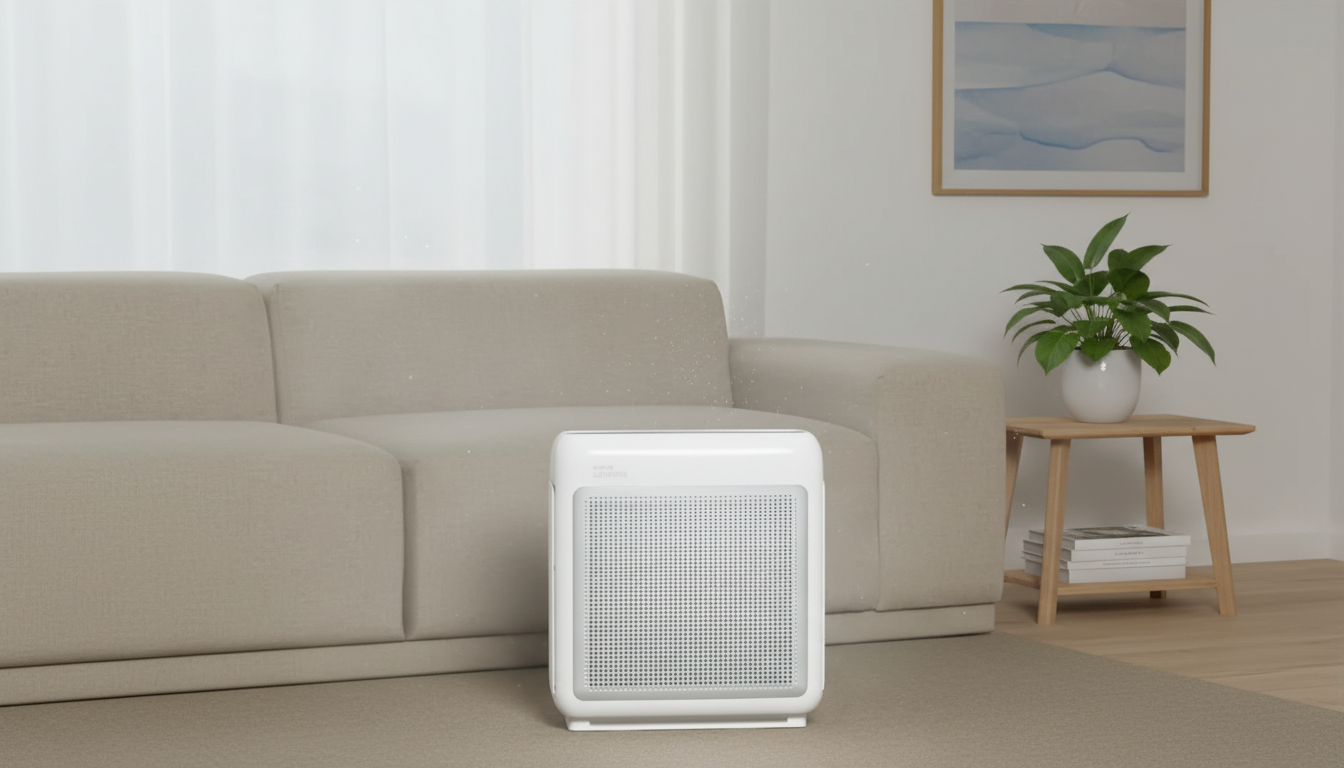
Advanced HEPA & Activated-Carbon Air Purifier for Cleaner Indoor Air
Indoor air can carry fine particles, smoke, odors, and gases that linger long after the source is gone. An air purifier that pairs high-efficiency particle filtration with activated carbon is designed to tackle both airborne particulates and many odor-causing compounds, helping rooms feel fresher and easier to breathe in day to day.
What This Air Purifier Is Designed to Remove
Different indoor air issues behave differently. Some float as solid particles (like dust and smoke), while others are gaseous and responsible for lingering smells. A dual-filtration purifier is built to address the most common day-to-day offenders.
- Fine particles: Captures small airborne particulates commonly associated with dust, pollen, and smoke.
- Pet-related debris: Helps reduce airborne dander and fur fragments that can circulate during shedding.
- Odors and some gases: Activated carbon targets many smells from cooking, pets, and household activities.
- Everyday indoor haze: Improves overall clarity of air by continuously cycling and filtering room air.
HEPA + Activated Carbon: How the Two-Stage Approach Works
Using two complementary filter types is a practical way to cover more “real life” air problems—especially when a room deals with both particles and odors.
- Particle filtration stage: A dense filter media traps airborne particles as air passes through.
- Odor and VOC adsorption stage: Activated carbon provides a large surface area that can adsorb odor molecules and some volatile organic compounds.
- Why pairing matters: Particle filters excel at solids, while carbon is better suited for many smells—together they cover more common indoor air issues.
- Best-use scenarios: Wildfire smoke seasons, homes with pets, cooking-heavy kitchens, and rooms that feel stale despite ventilation.
Filtration roles at a glance
| Component | Helps with | Notes |
|---|---|---|
| High-efficiency particle filter (HEPA-grade) | Dust, pollen, smoke particles, fine particulate matter | Performance depends on airflow and filter condition; replace on schedule |
| Activated carbon | Cooking odors, pet odors, some chemical smells | Adsorption capacity is finite; replacement restores odor control |
| Fan + housing | Air circulation through filters | Higher speeds usually clean faster but can add noise |
Where It Fits Best in a Home or Office
Placement and room choice affect how noticeable the improvement feels. Aim for a space where people spend time and where air tends to get “used up,” especially overnight or during busy hours.
- Bedrooms: Supports overnight air freshness; aim for steady operation at a comfortable noise level.
- Living rooms: Helpful for shared spaces where dust, tracked-in debris, and odors build up.
- Home offices: Reduces airborne irritants during long indoor work sessions.
- Kitchens and nearby areas: Carbon filtration can be especially useful after cooking.
- Placement basics: Keep a few inches of clearance around air inlets/outlets; avoid blocking the unit with furniture or curtains.
If you’re setting up a work zone where you spend hours at a time, pairing a clean-air routine with a functional workspace can make the room feel more comfortable overall. A streamlined desk like the Modern Chrome Writing Desk for Home Office can help keep the area uncluttered, which also makes it easier to dust and reduce particle buildup on surfaces.
Comfort Factors: Noise, Speed Settings, and Daily Use
Air purifiers are most effective when they can run often enough to keep up with what’s being generated in the room. The best setting is usually the one you’ll actually keep on.
- Fan speeds: Higher speeds typically provide faster cleaning; lower speeds can be better for continuous use.
- Noise planning: Choose a setting that matches the room—quiet for sleep, higher for quick clearing after cooking or smoke exposure.
- Consistency beats occasional use: Running daily (even at a lower setting) often maintains steadier air quality than short, infrequent bursts.
- Doors and windows: Filtration works best when the room is relatively closed; ventilation is still important when outdoor air quality is good.
For practical benchmarks, resources like the U.S. Environmental Protection Agency’s guide to air cleaners and the AHAM overview of CADR can help explain why airflow and filter condition matter as much as the filter type itself. For broader indoor air strategies beyond filtration, the CDC’s ventilation guidance is a useful reference point when outdoor air quality allows.
Filter Care and Replacement Rhythm
Simple maintenance checklist
| Task | Typical frequency | Why it matters |
|---|---|---|
| Inspect filter condition | Every 2–4 weeks | Catches buildup early and helps prevent airflow loss |
| Clean exterior vents/grilles | Monthly | Reduces dust that can restrict intake and recirculate |
| Replace particle filter | As recommended by the manufacturer or sooner if heavily used | Restores capture efficiency and airflow |
| Replace carbon filter/media | As recommended or when odors return | Restores odor and gas adsorption performance |
Getting the Most Out of a HEPA + Carbon Purifier
Product Spotlight: Advanced HEPA & Activated-Carbon Air Purifier
- Built around a combined approach: High-efficiency particle filtration for airborne particulates plus activated carbon for odor control.
- Good fit for odor + particulate challenges: Useful for homes with pets, frequent cooking, or seasonal smoke conditions.
- Practical ownership: Predictable upkeep through routine inspection and timely filter replacement.
- Shop details: Visit the Advanced HEPA & Activated-Carbon Air Purifier product page for current pricing and availability.
FAQ
Does activated carbon remove smoke smell?
Activated carbon can adsorb many odor compounds and some gases that contribute to smoke smell, while the particle filter captures smoke particles. Results depend on how strong the source is, the room size, and whether the carbon has started to saturate.
How long should an air purifier run each day?
Daily extended operation (and often continuous running) typically provides steadier air quality than short, occasional use. Use higher speeds to clear the air faster after cooking or smoke exposure, then switch to a lower setting for maintenance.
Can a HEPA air purifier help with pet allergies?
It can reduce airborne dander and dust that may trigger symptoms, especially when run consistently. It won’t remove allergens embedded in carpets or upholstery, so combining it with regular cleaning and pet grooming usually works best.











Leave a comment