


Home Decor Style Quiz + Checklist for a Cohesive Room
What a decor “style” actually solves (and what it doesn’t)
A defined decor style isn’t about putting your home in a box—it’s about turning scattered inspiration into a consistent set of decisions you can repeat. When the style is clear, you naturally narrow down your color direction, preferred materials, furniture shapes, and overall mood. That means fewer “maybe” purchases and more confident “yes” choices. For more guidance, see Free Downloads – Interior Design ebooks on Home Decorating.
A style framework also reduces decision fatigue. Instead of evaluating every item from scratch, you use simple filters: Does the scale fit? Does the finish match? Is the pattern level right for the room? Does it support how the space is used day to day?
Most importantly, style prevents common mismatches that make rooms feel off: too many competing wood tones, metals that clash, multiple statement pieces fighting for attention, or a rug pattern that changes the whole vibe. At the same time, style doesn’t require one permanent label. Many homes look best with a blend (like modern + warm rustic), and the mix can evolve room by room—especially when you pair it with real-life constraints like budget, timeline, cleaning tolerance, and pets or kids.
Quick style quiz: score your preferences in 10 minutes
Start fast by choosing three “anchors” that shape almost every design decision: your preferred mood (calm vs. energetic), contrast level (low vs. high), and complexity (minimal vs. layered). These anchors keep you from copying a look that’s beautiful online but stressful to live with.
Next, pick your top visual preferences: light vs. dark woods, matte vs. glossy finishes, straight lines vs. curves, and open space vs. cozy density. Then check your pattern comfort level—solids only, small-scale pattern, or bold statement prints—and note whether pattern belongs mostly on textiles (pillows, curtains, rugs) or on walls.
Finally, choose your “hero” category for the room: art, lighting, rugs, or a standout furniture piece. Limiting yourself to one hero per zone helps everything else fall into place.
| If you prefer… | Likely style direction | Helpful design cue |
|---|---|---|
| Clean lines, uncluttered surfaces | Modern / Minimal | Use fewer, larger pieces; prioritize negative space |
| Warm woods, relaxed textures | Scandinavian / Organic Modern | Layer linen, wool, and light wood; keep the palette soft |
| Antique shapes, detailed trim, classic art | Traditional / Classic | Repeat symmetry and timeless patterns (stripe, plaid) |
| Mix of old + new, curated collections | Eclectic | Unify with a consistent color story and repeated materials |
| Raw finishes, metal, and utilitarian forms | Industrial | Balance hard surfaces with textiles to avoid feeling cold |
| Soft curves, light colors, airy feel | Coastal / Casual | Use breathable textures and sun-washed tones, avoid heavy contrast |
Score your results into a primary style and a secondary style. The primary style guides big-ticket choices (sofa, bed, desk, dining table). The secondary style becomes your accent layer—small decor, art choices, and a few textures—so the room feels personal without tipping into “theme.”
Checklist method: turn the quiz result into a room recipe
Once you know your primary/secondary style, convert it into a “room recipe” you can follow while shopping.
1) Set a palette rule
Use 1–2 neutrals, 1 main color, and 1 accent color. Neutrals keep the room livable; the main color shapes the mood; the accent adds energy in smaller doses. For color direction and seasonal inspiration, reference standards from the Pantone Color Institute.
2) Choose finish and material priorities
Decide which materials lead the room—wood tone, metal family (warm vs. cool), stone look, and key textiles (linen, velvet, boucle, jute). Limiting dominant materials makes the space feel intentional.
3) Lock in scale with measurements
4) Create a repeatable pattern rule
5) Decide lighting temperature and shapes
6) Set a clutter policy
Decorating inspiration that stays organized (without endless scrolling)
For curated room ideas and styling references, browse a few authoritative galleries like Architectural Digest — Decorating Ideas and HGTV — Decorating, then bring only the repeatable elements into your plan.
Printable digital guide: what’s inside and how to use it
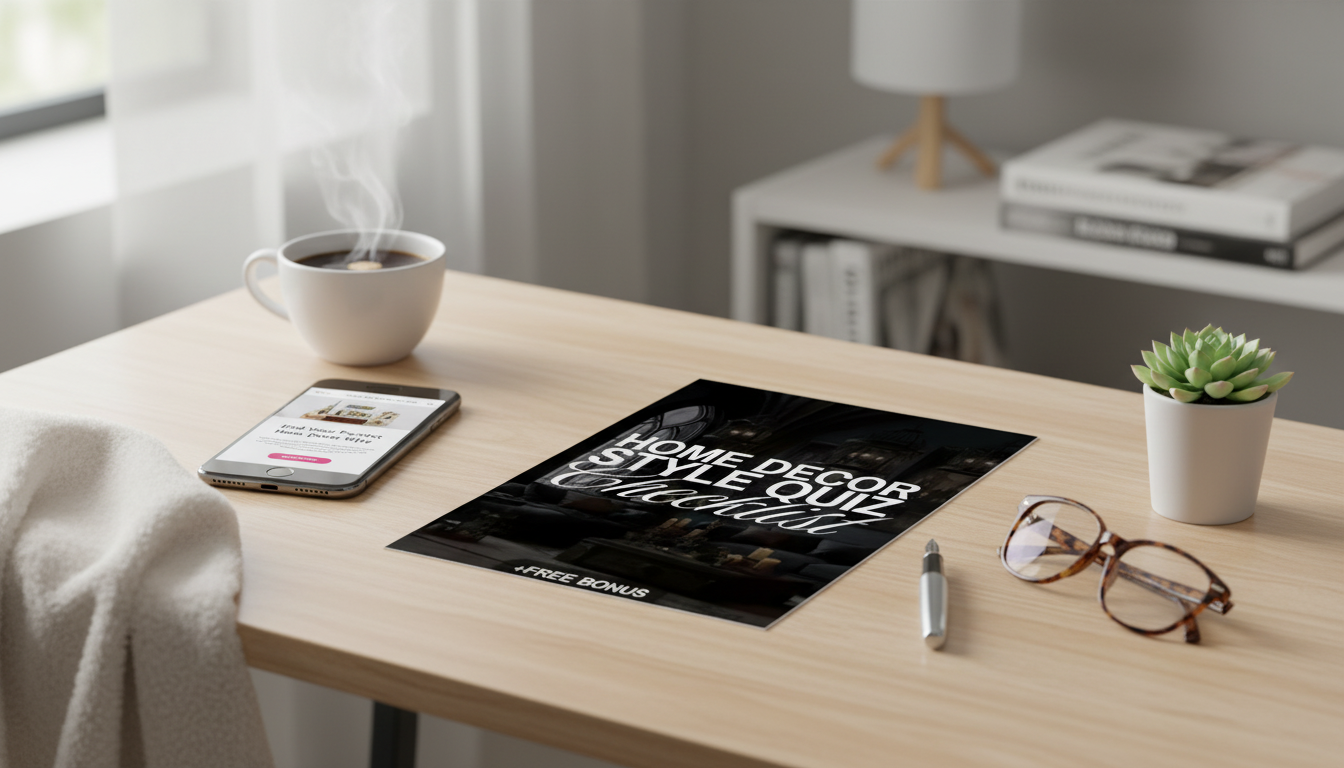
If you want a quick, repeatable process, the Home Decor Style Quiz Checklist digital download pulls the quiz, scoring prompts, and room checklist into a single printable guide. It’s designed to work for living rooms, bedrooms, entryways, and home offices—anywhere you want a cohesive look without overthinking every choice.
Style-forward product picks to match your results
- Modern chrome writing desk for a clean-lined home office (great for modern/minimal and high-contrast looks; pair with a simple desk lamp and one bold art piece).
- Ceramic vessel sink with peony flower design for a statement bath (ideal as a “hero” item—keep surrounding finishes quieter so it reads intentional, not busy).
- Home Decor Style Quiz Checklist digital download (a fast way to capture your style blend, track decisions, and reuse the same process in future rooms).
Common style-mix pitfalls (and quick fixes)
Next step: apply your style result to a single room this week
FAQ
How do you figure out your home decor style if you like multiple looks?
Choose one primary style for major pieces and a secondary style for accents. Keep a shared color palette and repeat a few core materials (like the same wood tone and one dominant metal) so the mix still feels cohesive.
Should you pick a color palette before furniture and decor?
Set a flexible palette early—neutrals plus a main color and an accent—then finalize exact shades after choosing big fixed elements like the rug, sofa, and key wood tones. Those larger items tend to “set” the undertone direction of the room.
What should you buy first when decorating a room from scratch?
Start with foundations: typically the rug and main furniture piece, then lighting, then textiles and accessories. Measure and plan the layout first so each purchase fits the room and supports good flow.









Leave a comment