


Buffet Sideboard with Glass Doors: Fit, Style & Care
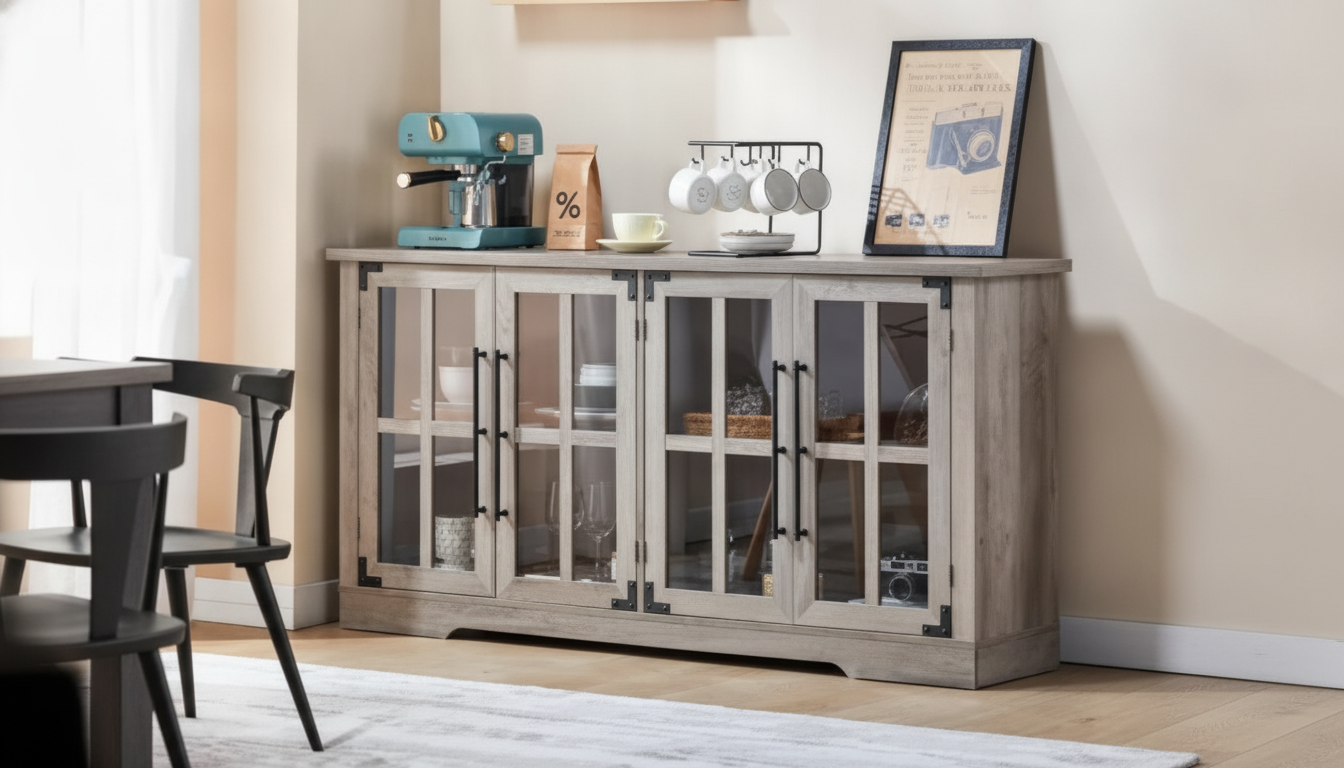
Buffet Sideboard Cabinet with Glass Doors: A Smart Mix of Storage and Display
A buffet sideboard with glass doors combines concealed storage with a display-ready front, making it useful for dining rooms, kitchens, and open-plan living spaces. This guide covers what to look for, how to style and place it, and practical care tips so the cabinet stays stable, functional, and easy to maintain over time.
What this cabinet adds to a room
A glass-door buffet sideboard is one of those pieces that quietly improves day-to-day flow. It gives you a “home base” for serving, hosting, and storing the items that tend to migrate across counters and tables.
- Creates a dedicated zone for serving and storage: dishes, linens, bar tools, and small appliances can stay organized and close to where they’re used.
- Glass doors keep frequently used items visible while reducing dust compared with open shelving.
- A wide top surface works as a buffet line, coffee station, bar setup, or décor ledge.
- Balances “display” and “hideaway” storage: show glassware or ceramics up top while tucking less-attractive items behind doors or in lower compartments.
- Works beyond dining: entryway drop zone, living-room media storage (if ventilation and cable routing fit), or office storage for binders and supplies.
Quick fit check before buying
Most disappointments with case goods come down to spacing, door clearance, and everyday traffic paths. A two-minute fit check helps prevent awkward placement and scraped baseboards.
- Measure the wall width and leave breathing room: aim for a few inches of clearance on each side so the piece doesn’t feel cramped.
- Confirm door swing and traffic flow: ensure doors open fully without colliding with dining chairs, islands, or baseboards.
- Plan for serving use: leave enough space in front to stand and pass behind someone (especially in narrower dining areas).
- Check outlet access if it will host a coffee station or bar fridge; consider cable management needs.
- If placed on carpet or uneven floors, plan for leveling and stability (shims or adjustable feet if available).
Placement guidelines for a buffet sideboard
| Location | Best use | Spacing to plan | Extra considerations |
|---|---|---|---|
| Dining room wall | Serving line, dish storage | Room to open doors and walk past | Anchor to wall if kids/pets are present; protect wall with bumpers |
| Kitchen perimeter | Small appliances, pantry overflow | Clearance from cooking area | Avoid steam/heat sources; wipe spills quickly |
| Living room | Display + hidden storage | Keep vents/cables accessible | Prefer enclosed bins for remotes; consider soft-close to reduce noise |
| Entryway | Mail, keys, seasonal items | Door swing clearance | Add trays/hooks above; use glass area for décor instead of clutter |
Storage and display: making glass doors work for you
Glass doors look best when the shelves feel curated, not crammed. The goal is to create visual rhythm while keeping everyday items easy to grab.
- Use the “rule of thirds” for display: group items by height and leave negative space so shelves don’t look crowded.
- Place heavier items on lower shelves to reduce strain and improve stability.
- Keep everyday pieces at hand height; store occasional serving platters higher or lower.
- Add shelf liners or felt pads under ceramics and glassware to reduce sliding and vibration when doors close.
- For a cleaner look, use matching sets (glassware, bowls) and limit colors to a simple palette.
- Consider interior lighting (battery puck lights) to highlight display pieces without running cords.
Materials, hardware, and durability cues
Two cabinets can look similar online but feel very different in daily use. Focus on the parts that affect alignment, wobble resistance, and how well the finish tolerates real life.
- Door and hinge quality matter: smooth alignment, consistent gaps, and sturdy hinges reduce sagging over time.
- Look for solid joinery and a stable back panel; racking (side-to-side wobble) is a common long-term issue in casegoods.
- Glass should feel secure in its frame; if tempered glass is used, it typically offers improved impact resistance for household use.
- A durable finish resists water rings and mild heat; always use trivets for hot serving dishes.
- Soft-close hinges can reduce slamming, which helps protect both glass doors and cabinet alignment.
- If the cabinet will hold bottles or heavy dish stacks, distribute weight and avoid overloading shelves.
For deeper background on how wood and wood-based panels behave over time (moisture movement, fasteners, and finishes), the Forest Products Laboratory (USDA) Wood Handbook is a helpful reference.
Care, cleaning, and keeping it looking new
A few small habits keep glass doors clearer, hardware tighter, and surfaces better protected—especially if the cabinet doubles as a coffee station or serving hub.
Safety and stability in everyday use
For official guidance on anchoring and tip-over risk reduction, review CPSC Furniture Tip-Over Prevention.
A practical option to consider
- Buffet Sideboard Cabinet with Glass Doors — a strong fit for display-forward storage and a functional buffet top.
- Modern Chrome Writing Desk for Home Office — useful if you’re pairing dining storage with a compact workspace in an open-plan room.
- Ceramic Vessel Sink with Peony Flower Design — a decorative upgrade option when a dining refresh overlaps with a powder room or bar-area update.
FAQ
How durable are IKEA buffet cabinets?
Durability varies by line and construction: models with sturdier joinery, thicker panels, quality hinges, and solid back bracing tend to resist wobble and door sagging longer. Careful assembly, wall anchoring, and keeping heavy items on lower shelves also make a major difference.










Leave a comment