


Wood Cat Tree Tower with Hidden Litter Box & Posts
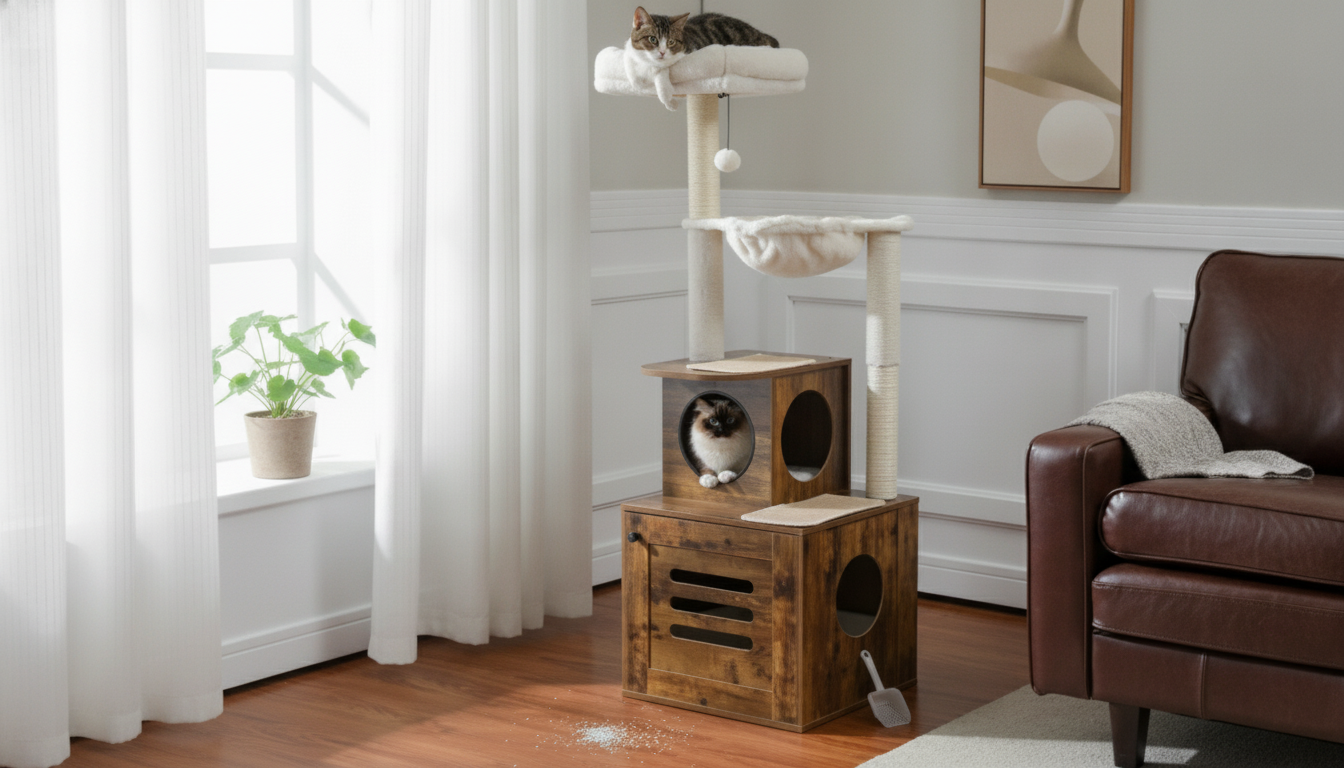
Deluxe Wooden Cat Tree Tower with Built-In Litter Box & Scratching Posts: One Clean, Climbable Cat Station
A single piece of furniture can handle climbing, scratching, lounging, and litter privacy—without turning the room into a patchwork of pet gear. This deluxe wooden tower combines a cat tree and a concealed litter area in a sturdier, more furniture-like build, designed to support daily routines for both cats and humans.
If you’re aiming for a cleaner-looking setup in an apartment, open-concept living space, or busy household, a combined tower can also simplify where your cat eats, plays, scratches, and heads for privacy—while keeping the “cat zone” more intentional and contained.
What Makes This Tower Different From Standard Cat Trees
Many cat trees focus on climbing and scratching, but still leave the litter box as a separate item to hide (or step around). A tower with a built-in litter area changes the layout of your home by consolidating the essentials into one footprint: vertical territory above, private toileting below.
Compared with carpeted, particle-board towers, a wooden build tends to look more like real furniture and can feel more solid underfoot—especially for cats that launch themselves onto perches at full speed. The best layouts place scratching posts where cats naturally “check in,” like the path from sleeping spot to food to play, helping redirect claws away from door frames and sofa corners.
For a ready-to-go option, see the Deluxe Wooden Cat Tree Tower with Built-In Litter Box & Scratching Posts, which is designed to serve as a single hub rather than a collection of separate pieces.
Built-In Litter Box Area: Privacy, Odor Control, and Daily Use
Some cats prefer a bit of privacy—especially in households with kids, guests, or other pets moving through the same rooms. An enclosed or semi-enclosed litter zone can help a cat feel less exposed, which may reduce hesitation about using the box.
That said, odor control still comes down to fundamentals: ventilation, litter choice, and consistent cleaning. An enclosure can visually contain mess, but it shouldn’t trap stale air. If the access panel is inconvenient, it’s easy to postpone scooping, and that’s when cats start searching for alternatives. For widely accepted toileting best practices, resources like the International Cat Care toileting advice and the ASPCA cat care guidance are helpful references for routine and box setup.
Location matters too. If your cat already favors a specific spot, keep the new tower near that area during the transition. A sudden move to a loud laundry room, a tight corner, or a high-traffic hallway can cause avoidance even if the enclosure itself is well designed.
Litter-area checklist for smooth routines
| Consideration | Why it matters | Quick tip |
|---|---|---|
| Access for scooping | If it’s awkward, it won’t stay clean | Choose a setup that allows a full scoop pass without removing the entire pan |
| Ventilation | Helps reduce odor build-up | Use low-dust litter and keep the surrounding area clear for airflow |
| Space for the cat to turn | Some cats avoid cramped boxes | Confirm the interior can fit the cat comfortably plus a standard litter pan |
| Tracking control | Litter scatter is a common complaint | Add a textured litter mat outside the entry point |
Scratching Posts: Protecting Furniture While Supporting Healthy Claws
Scratching is normal cat behavior tied to claw maintenance, scent marking, and a full-body stretch. The goal isn’t to stop scratching—it’s to make the “right” surface feel more appealing than the couch.
Placement makes a real difference. Cats often scratch when they wake up, when they greet you, or when they pass through a favorite route. Posts positioned at those high-traffic touchpoints get used more reliably than a single post tucked in a spare room.
Material and stability are the deal-breakers. If a post wobbles, many cats will go back to sturdy household surfaces that don’t move. A solid wooden frame can help keep the structure feeling planted. Encourage repeat use with simple positive reinforcement—offer a treat after a scratch, or start a short play session near the tower so it becomes part of the daily pattern.
Comfort and Enrichment: Vertical Space, Rest Spots, and Multi-Cat Homes
Vertical territory can make a home feel bigger to a cat. In multi-cat households, it can also reduce tension by creating more resting zones and “routes” around one another without confrontation. A tall, climbable tower gives confident cats observation perches while offering more cautious cats a way to move without crossing the center of the room.
Materials, Stability, and Home-Friendly Design
Setup Tips for Fast Cat Adoption
When This Tower Is a Great Fit (and When to Pass)
If you’re building a coordinated “pet travel” setup alongside your home station, the Sturdy Car Dog Hammock With Side Flaps is an in-stock option designed to help protect car seats from hair and mess during trips with dogs.
FAQ
Will a cat actually use a built-in litter box enclosure?
Most cats adapt if the interior is roomy, the litter stays the same, and access is easy. Transition gradually by keeping the previous box nearby for a few days and rewarding calm exploration.
How often should the litter area be cleaned in an enclosed setup?
Scoop daily and fully change litter as needed based on litter type and number of cats. Enclosed spaces can concentrate odors, so consistent cleaning and ventilation matter.
How do scratching posts on a tower reduce furniture scratching?
Posts placed where cats naturally scratch (routes, near resting spots) and that feel stable are more likely to be used. Reinforce with treats and play near the posts so the tower becomes the first choice.












Leave a comment